
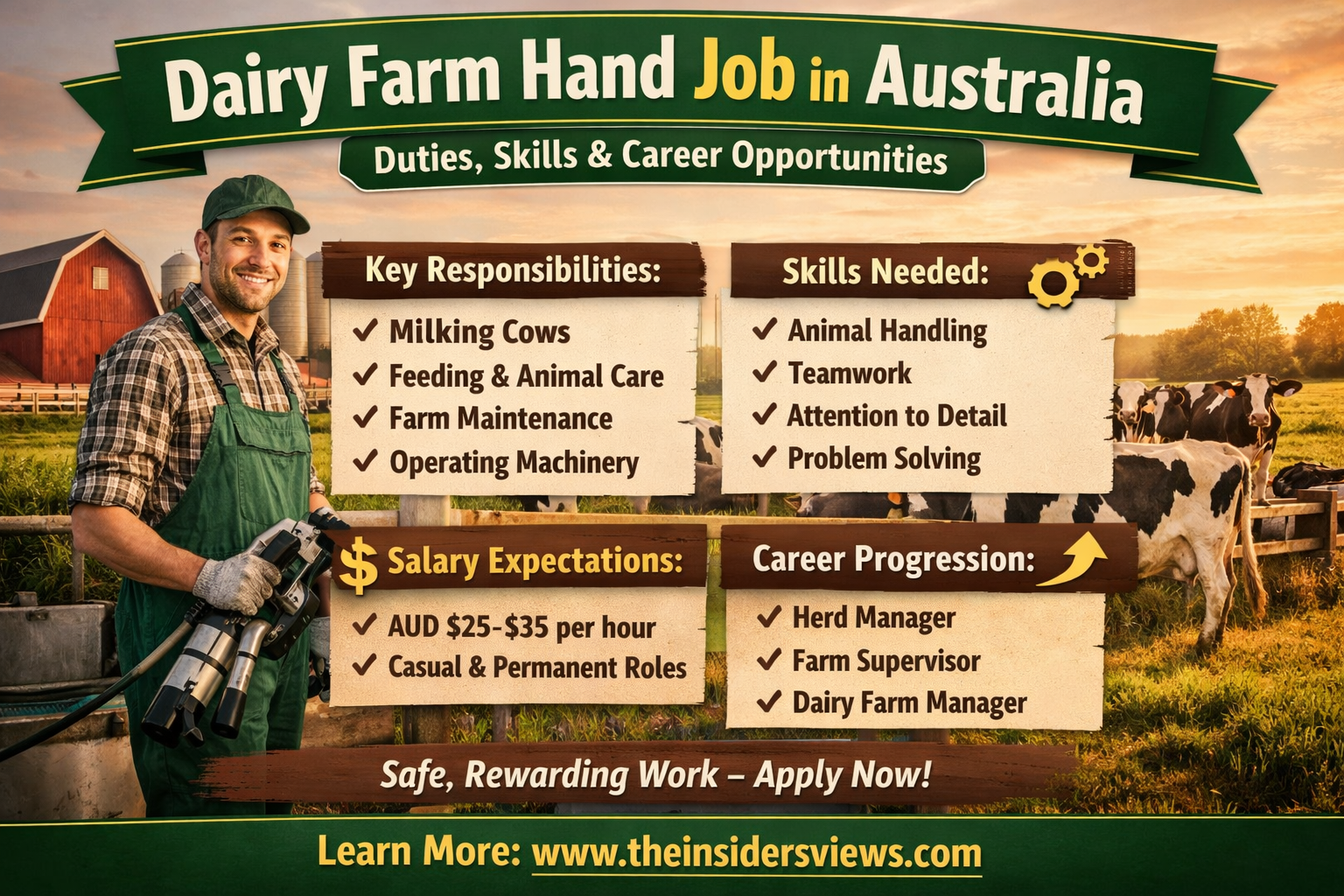
The dairy industry in Australia plays a major role in the agricultural economy. Farms across regions such as Warwick, Toowoomba, and the Darling Downs in Queensland depend on skilled workers who manage livestock, maintain equipment, and support daily farm operations. One of the most important positions on these farms is the Dairy Farm Hand.
We rely on dedicated farm workers to support milk production, livestock health, and farm productivity. This guide explains the daily tasks, required skills, working conditions, and career growth opportunities for anyone interested in a Dairy Farm Hand job in Australia.
Also Check
- Contract Pipe Welder Jobs in New Zealand
- Dairy Farm Hand Jobs In Australia 2026
- Farm Workers Supervisor Job In Canada 2026
- Truck Driver Job in Upper Hammonds Plains, Nova Scotia, Canada 2026
- Poultry Farm Worker Job in Puslinch, Ontario, Canada 2026
Understanding the Role of a Dairy Farm Hand
A Dairy Farm Hand performs daily tasks related to the care of dairy cattle and the operation of the farm. The role supports the milking process, herd health management, feeding routines, and general farm maintenance.
Workers often operate on farms located in rural areas. For example, farms near Warwick in Queensland provide access to large grazing lands suitable for dairy operations.
A typical shift involves handling livestock, operating equipment, maintaining facilities, and recording farm data. Efficiency and attention to detail help maintain milk quality and animal health.
Daily Responsibilities on a Dairy Farm
A Dairy Farm Hand handles many tasks during the day. Each activity supports the smooth operation of the dairy farm.
Milking Dairy Cows
Milking remains the central task on any dairy farm.
Workers follow strict hygiene and safety procedures to protect milk quality. Modern farms use automated systems, yet human oversight stays essential.
Key steps include:
- Preparing cows for milking
- Cleaning udders before milking
- Monitoring milking machines
- Checking milk flow and quality
- Sanitizing equipment after use
Most farms perform milking two times per day, often early morning and late afternoon.
Feeding and Livestock Care
Healthy cows produce more milk. Farm hands manage feeding routines and watch animal behavior.
Tasks include:
- Delivering balanced feed and supplements
- Checking water supply
- Observing cows for signs of illness
- Reporting health concerns
- Supporting veterinary treatments
Animal welfare remains a priority. Workers with strong animal handling skills help maintain calm and healthy herds.
Operating Farm Machinery
Modern dairy farms depend on equipment to maintain efficiency.
Farm hands operate machinery such as:
- Tractors
- Feed mixers
- Milk pumps
- Telehandlers
- Farm trucks
Basic mechanical knowledge helps reduce downtime and improves productivity.
Farm Maintenance and Repairs
Daily farm life involves constant maintenance. Workers perform general repair tasks to keep facilities safe and functional.
Maintenance tasks include:
- Fence repairs
- Gate maintenance
- Shed cleaning
- Minor building repairs
- Yard and paddock upkeep
A well-maintained farm supports livestock safety and worker efficiency.
Recording Farm Data
Modern dairy operations rely on farm management software to track production and herd health.
Farm hands record information such as:
- Milk yield per cow
- Feeding schedules
- Health treatments
- Equipment maintenance
- Calving records
Accurate data helps farm managers make better decisions about herd productivity.
Skills Required for Dairy Farm Work
Employers value practical skills and a strong work ethic. Many farms welcome beginners who show commitment and willingness to learn.
Key abilities include:
Animal Handling Skills
Handling livestock requires patience and awareness. Calm movements reduce stress for animals and workers.
Workers who respect livestock often build strong careers in agriculture.
Teamwork and Communication
Farm operations rely on teamwork.
Workers coordinate during tasks such as milking, feeding, and machinery operation. Clear communication reduces errors and improves efficiency.
Attention to Detail
Milk quality standards remain strict in Australia. Small mistakes in hygiene or equipment cleaning lead to contamination.
Farm hands maintain focus during tasks to protect milk safety and farm reputation.
Problem-Solving Ability
Farm life presents unexpected challenges.
Workers face situations such as:
- Equipment breakdowns
- Animal illness
- Weather disruptions
- Feed shortages
Quick thinking keeps operations running smoothly.
Working Conditions on Australian Dairy Farms
A Dairy Farm Hand often works outdoors in different weather conditions.
Typical work conditions include:
- Early morning shifts
- Weekend work
- Physical activity throughout the day
- Exposure to animals and machinery
Farms located near Warwick in Queensland sit within agricultural regions known for cattle farming and dairy production.
Workers usually need reliable transportation because farms sit outside urban centers.
Salary Expectations for Dairy Farm Hands
Pay varies based on experience, location, and employment type.
Typical earnings in Australia include:
- Casual hourly wage often ranges from AUD 25 to AUD 35
- Experienced workers earn higher pay
- Permanent positions include additional benefits
Some farms offer training programs and career development opportunities for workers who show long-term commitment.
Career Growth in the Dairy Industry
Many successful farm managers started as Dairy Farm Hands.
Career progression often follows this path:
- Dairy Farm Hand
- Senior Farm Hand
- Herd Manager
- Farm Supervisor
- Dairy Farm Manager
Workers who gain experience with machinery, herd health, and farm management systems increase promotion opportunities.
Some also move into specialized roles such as:
- Livestock breeding
- Agricultural equipment operation
- Farm business management
Why Dairy Farm Work Offers Long-Term Opportunity
The Australian dairy industry continues to demand skilled workers.
Global demand for dairy products supports strong employment prospects in agriculture.
Advantages of this career include:
- Stable employment in rural areas
- Hands-on work environment
- Skill development in agriculture
- Opportunity for career advancement
- Access to training programs
Farm experience also opens opportunities in agricultural technology, livestock management, and farm consulting.
How to Apply for a Dairy Farm Hand Job
Employers usually request a few basic requirements.
Applicants should prepare:
- Resume showing agricultural or farm experience
- Driver’s license
- Proof of work eligibility in Australia
- Availability for flexible shifts
Some employers ask additional questions such as:
- Years of farm experience
- Expected hourly wage
- Notice period with current employer
Applicants who show reliability, willingness to learn, and respect for livestock stand out during hiring.
Safety Guidelines for Dairy Farm Workers
Safety protects both workers and animals.
Farm hands follow guidelines such as:
- Wearing protective clothing
- Maintaining machinery safely
- Following animal handling procedures
- Keeping work areas clean
Proper safety practices reduce injuries and protect farm operations.
Disclaimer
This article provides general information about the Dairy Farm Hand role in Australia, including responsibilities, skills, and career opportunities. Job conditions, salary levels, and requirements differ depending on the employer, farm size, and regional regulations. Readers should verify details directly with employers or official employment sources before applying for positions. Personal financial details, bank information, or credit card details should never be shared during job applications unless dealing with verified employers or trusted recruitment platforms.